Chapter 2—The Core

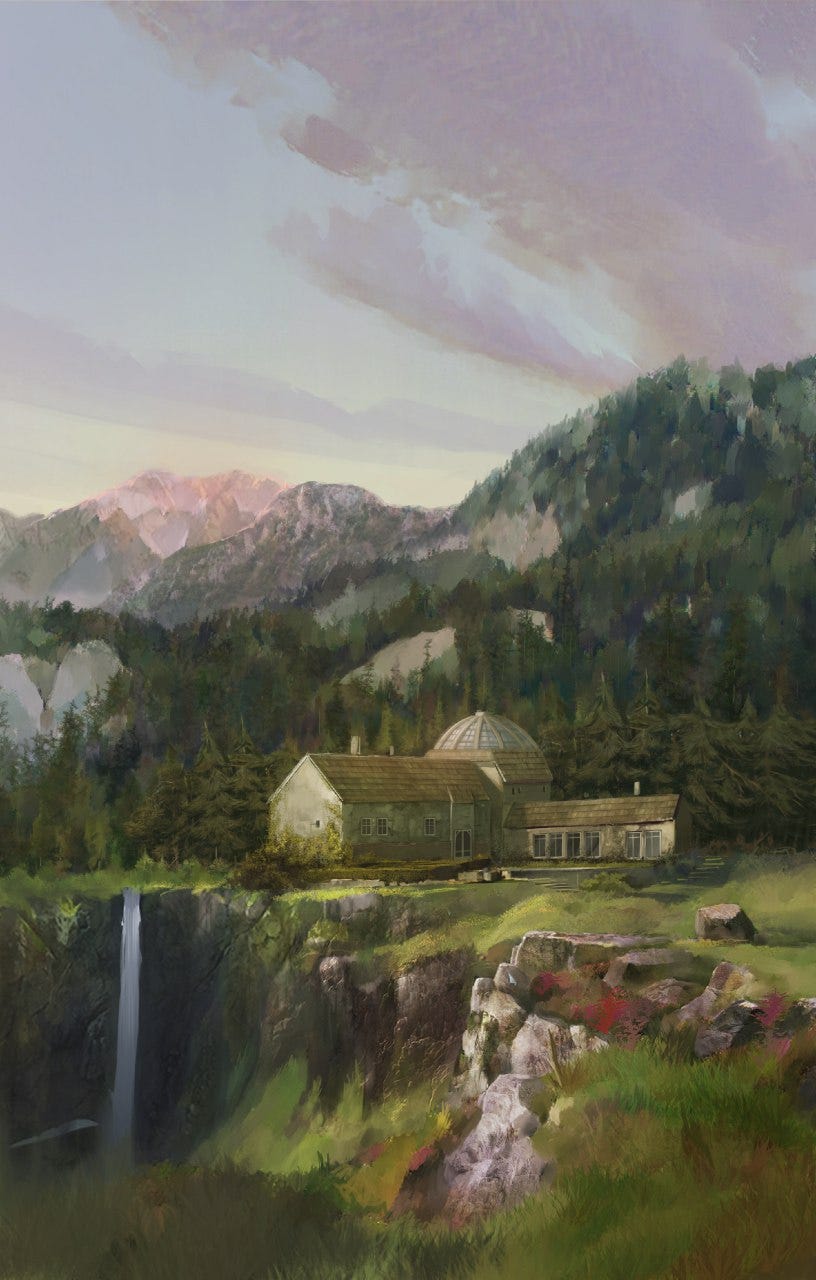
Some houses are defined by their bricks, their roofs, and their place on a map. The House in Blue Hollow, tucked into the frozen nowhere of Norway, is defined by its people, and three of them matter more than the rest. Nila, Claudio, and Bruce aren’t just residents; they’re the heartbeat of this strange, shifting space. They’re the reason this place feels alive, the reason it feels like a story I didn’t ask to be part of.
Nila is the axis, the one who makes a house more than walls and creaking floors. She calls us a tribe, which sounds absurd in 2035, but somehow it fits. Every move she makes feels intentional, like she’s weaving the people here into a pattern only she can see. When her mood sours—and it does, quick and sharp—she vanishes. No warning, no explanation. Then she’s back, acting like nothing happened, and the house’s rhythm snaps into place around her. Her presence lightens everything, makes the air easier to breathe, like some quiet magic I can’t pin down.
She’s more round than tall, stocky and strong, with arms that look made for kneading dough or hauling wood. But her strength flickers, limited by some ailment she won’t name, and I can see it eats at her when she falters. Her reddish-blond hair is a chaotic mess of ponytails most days, but when it’s down, it’s wild, flowing, a relic of someone she might have been. Her blue eyes catch the sun, freckles blooming across her skin in Norway’s fleeting summer—she grumbles if you point them out. But her grin, when it comes, hits like a spotlight. It makes you feel you’ve done something brilliant, even if you haven’t. We see her as a mother to us all, though we’d never say it to her face.
Claudio, my granddad, is the house’s artist, its restless dreamer. Where Nila shapes how we connect, he shapes what we see. Every wall is his canvas—murals of jungles, seas, animals so vivid they might leap out at you. In Nila’s room, a tiger stalks from an archway, green eyes glinting; on another wall, an autumn forest burns gold and red. Each room tells a story, surreal or stark, breathing with his imagination. He’s behind most of our food too—pizza, pasta, bread, miracles from local scraps. But he moans endlessly about missing the sea, the sun, the cheeses and cured meats you can’t get here. Twice a year, he and Nila escape to soak in salt and light by the sea, recharging him for his next creative burst. When a visitor smuggles in a suitcase of prosciutto, the house erupts in celebration, like he’s been handed a rare paint. Because when Claudio is happy, everyone’s happy.
Bruce is the quiet engine, the mind beneath the noise. Where Nila binds and Claudio paints, he sees. He moves through the house with a knowing silence—playing video games, nursing a beer, building odd contraptions through his love for aerodynamics—but his blue eyes, sharp and crystal clear behind glasses, can cut through you. When he looks at you, you’re the only person in the room, and you can’t shake the feeling that he knows what you’re hiding, but doesn’t judge you for it. Everyone trusts him, though no one could tell you why. He and Nila, though—they’re something else. In a crowd, they’re tuned to each other, a glance or half-word enough, like they hold a conversation the rest of us can’t hear. Sometimes it’s so intimate you feel you should turn away, move along, leave them alone, even when they’re just sitting there doing perfectly innocent things.
These three are the core, the house’s memory, and pulse. But they’re not alone. There are others, a shifting cast that makes this place feel like it’s always morphing, adapting to whoever’s loudest on any given day.
Dean, a few years older than me, is the life of the party—cocky, quick with a jab, grown up in these walls so he knows every corner. He calls me the runt of the pack, and I laugh along, because no one can be mad at Dean. I am the new kid, the outsider, it’s true. Too young and clueless to fit.
Then there’s Sarah, my cousin, cheerful but distant, more at home with the cows and goats than with me. She’ll smile at my lame jokes, polite and distracted, then move on to something else. Our parrot, José, seems to have a crush on her, as he screeches “Hola Guapa!” every time she passes. And Giulia, maybe my age, maybe not, flutters like a ghost, all huge eyes and whispered nothings to the air. She cringes when Dean teases her, and he plays it up—“Boo!” or a dramatic slump into a chair—while she mumbles and flees. Weird, all of them. Weirder by the day. I wonder if I’ll end up like that too.
Then there’s Linda. No one knows her age or much else. She’s a spectre, thin as a whisper, drifting in flowing dresses—light in summer, heavy velvet in winter. She doesn’t speak, not to us. If you try, she’ll stare at you for a moment like a monkey just spoke, then sigh and turn back to her tea or her book. Sometimes she murmurs to Nila, who nods or rubs her chin, and that’s it. Linda’s got a double room, forbidden to all on pain of banishment—or worse, some whisper. Pass her door, and a musty whiff hits you, like damp woods and mushrooms, not bad but baffling. Claudio once painted a cave in there, before she came, following Linda’s orders through Nila—a crystal cavern, lit from within, meant to trick the eye into seeing an impossible depth: a trompe-l’œil, Dean called it, smirking as he corrected me. Linda doesn’t eat, not really, just nibbles and sips vegetable concoctions. She’s ancient, hair a dirty-looking grey with black streaks, eyes cloudy with green flecks as if from some lost beauty. I asked Nila her age once. “A year older than me,” she said, turning to look at Linda, half-distracted, half-surprised, as if she couldn’t believe it herself. No one buys it. Linda feels as old as time itself, and I can’t shake the thought she’s tied to why we’re here.
Why are we here? That’s the question chewing at me. I was pulled out of school early, yanked from San Francisco’s warmth—my friends, the music, the life I knew—because Nila called. My dad wouldn’t say much, just that we had to come to the House in Blue Hollow. I wasn’t thrilled. Tell your classmates you went to Europe, and they’re like, “Whoa, where, man? Paris? Rome? London?” So you tell them “the middle of fucking nowhere, in Norway,” and they’re like, “Is that even Europe?” Yeah, I wasn’t jumping for joy. To put the cherry on top, someone had died. Who was it? No clue. I asked around, and they dodged the question: “It’s not for us to say.” Whoever it was, they mattered enough to drag us halfway across the world, though.
Those first days were maddening. Nila greeted us with warmth, but her attention was unfocused, darting all over the place, it seemed. She showed us to our room—wooden, cozy, a stove humming, mist-cloaked forest out the window—and whisked my dad away before I could blink. I stood there, a dumbass in a pretty Nordic cage, no explanation, no apology. Objectively, it’s stunning. But I left California for this? What the fuck am I doing here? I’m used to keeping quiet, never complaining—my parents raised me that way—but Christ, I was itching with it. My dad, meanwhile, paced like a caged thing. He’s quick with words, sharp with insight—people always seek him out to unpack their messes. Here, he talked to everyone, listened hard, but spent hours on his phone, sorting work, or vanishing on long, silent walks. I’ve seen him like this before, when something big needs fixing. He’s detached, but there if you need him. This time, though, it’s different. This isn’t just a trip. He’s here for a reason.
The house knows it, too. Everyone moves with a held breath, conversations dipping when we enter, restarting in a different key. Glances dart—quick, loaded, saying everything and nothing. Nila watches us, not hostile, but like she’s measuring something I can’t see. Catch her eye, and she smiles, a secret pain behind it. I played video games, watched movies, walked the grounds as little as I could, and kept to myself. But I felt it, creeping under my skin. We’re part of something bigger, something set spinning long before we landed here. Something that’ll unfold whether I’m ready or not. This house, with its blue shadows and odd souls, isn’t just a place. It’s a story. My story, too, whether I like it or not.